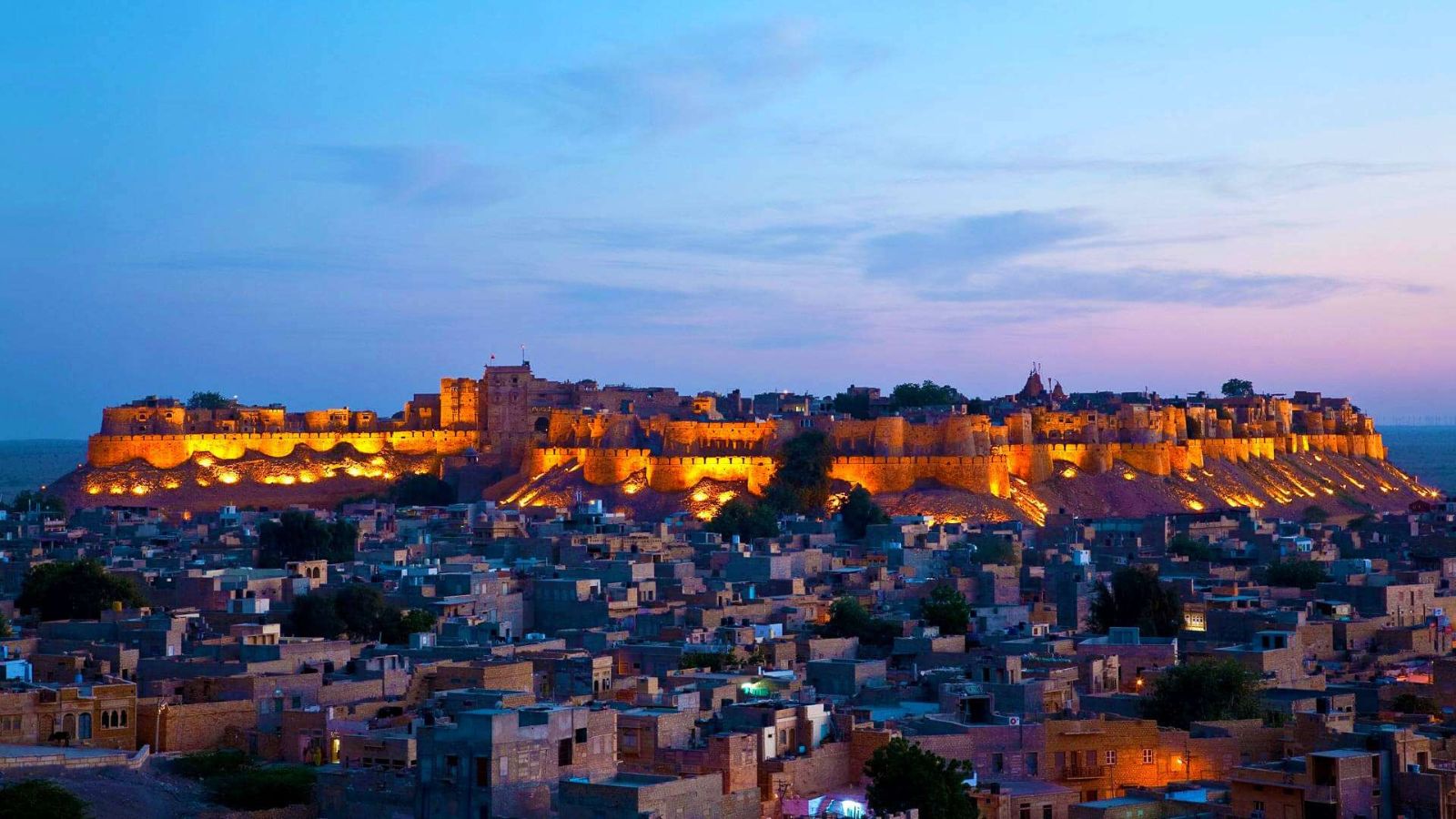


The Jain Temples in Jaisalmer are among the city's most remarkable architectural and spiritual treasures. Located inside the magnificent Jaisalmer Fort, these centuries-old temples are admired for their intricate carvings, peaceful atmosphere, and rich religious heritage. Built between the 12th and 16th centuries by wealthy Jain merchants, the temples continue to attract pilgrims, history enthusiasts, photographers, and travelers from around the world.
Constructed from the famous golden-yellow sandstone of Jaisalmer, the temples blend seamlessly with the fort's architecture. Despite the hardness of the stone, the artisans created incredibly detailed sculptures, decorative pillars, ceilings, and walls that showcase exceptional craftsmanship. Every corner of these temples reflects the artistic brilliance of medieval Rajasthan.
The temple complex consists of seven interconnected Jain temples dedicated to different Tirthankaras. Among them, the Chandraprabhu Temple, Parsvanath Temple, Sambhavnath Temple, Shitalnath Temple, Rishabhdev Temple, Shantinath Temple, and Kunthunath Temple are the most significant. Each temple features beautifully sculpted idols, ornate domes, finely carved toranas (decorative gateways), and sacred sanctums where devotees offer prayers.
The Parsvanath Temple is considered one of the finest in the complex. Its elaborate stone carvings depict celestial beings, floral patterns, mythical figures, and scenes inspired by Jain philosophy. The temple's beautifully decorated mandapa and intricately carved pillars demonstrate the extraordinary skill of local craftsmen.
Another highlight is the Chandraprabhu Temple, dedicated to the eighth Jain Tirthankara. Built in the early medieval period, it is admired for its elegant architecture, peaceful surroundings, and exquisite ceiling carvings. The temple remains an important place of worship for the Jain community.
The temples also house the famous Gyan Bhandar, an ancient library preserving rare Jain manuscripts, palm-leaf scriptures, miniature paintings, and historical documents. Many of these priceless manuscripts are written in Sanskrit, Prakrit, and other ancient Indian languages, making the collection invaluable for scholars and researchers interested in Jain literature and Indian history.
Visitors are often amazed by the delicate stone lattice windows, carved ceilings, and symmetrical layouts that allow natural light to illuminate the interiors beautifully. The peaceful ambience encourages quiet reflection, making the temples not only religious sites but also places of meditation and cultural appreciation.
The best time to visit the Jain Temples is between October and March, when Jaisalmer enjoys pleasant weather suitable for sightseeing. Early morning visits provide a peaceful atmosphere and soft natural lighting, making it an ideal time for photography and exploring the intricate details without large crowds.
As these are active places of worship, visitors should dress modestly, remove footwear before entering, and maintain silence inside the temple premises. Photography may be restricted in certain sections, particularly around the sacred idols and manuscript collections, so it is advisable to follow the instructions provided by temple authorities.
A visit to the Jain Temples in Jaisalmer offers far more than architectural beauty. It provides a fascinating journey into Rajasthan's rich cultural heritage, Jain philosophy, medieval craftsmanship, and centuries of spiritual devotion. Whether you are a pilgrim seeking blessings, a history lover exploring ancient monuments, or a traveler discovering the Golden City, these magnificent temples promise an unforgettable experience that perfectly complements the timeless charm of Jaisalmer Fort.